The Silk Road is much more than an old trading route system. This network of cultural, economic and technological exchange has been the subject of myths and realities that have lasted over time. In this article, we will explore in depth the Silk Road, the mythology that surrounds it and its influence on ancient culture. Join us on this journey through the history, myths, culture and realities of the Silk Road.
Introduction
The Silk Road has captivated the imagination of generations with their stories of adventures, magnificent treasures and encounters between cultures. Often associated with mysteries and legends, this impressive network of trade routes connected to the East and the West, promoting not only merchandise trade, but also the exchange of knowledge, ideas and cultures.
In this article, we will unravel the secrets of the Silk Road, from its historical origins to its impact on mythology and ancient culture. We will discover the truth behind the myths that have endured over time and explore the profound influence it had on ancient civilizations. Prepare to embark on a fascinating journey to the past and discover the hidden treasures of the Silk Road.
History and Background
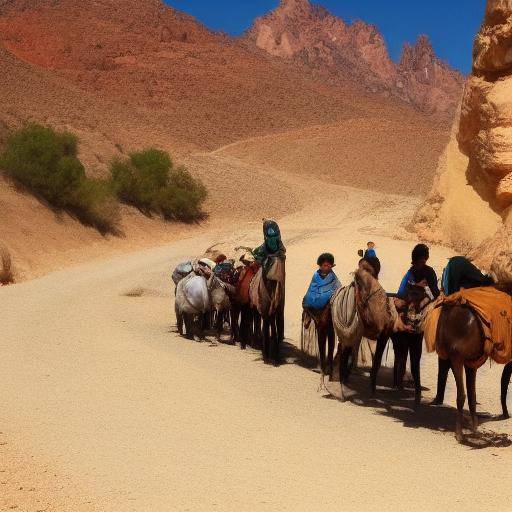
The Silk Road dates back more than two thousand years, when the civilizations of Asia, Europe and Africa established a network of trades that transformed the known world. From imperial China to the Roman Empire, this commercial route transcended geographical and cultural borders, facilitating the exchange of goods such as silk, spices, jewellery and other exotic products.
Origins and Historical Significance
The first remnants of the Silk Road go back to the second century BC, when Chinese merchants began to export silk to the West, establishing a commercial connection that would change the course of history. Over time, the route expanded to encompass not only material goods, but also knowledge, religions and customs of civilizations throughout its extensive journey.
Significant developments
Various historical events, such as the expansion of the Mongol Empire and the opening of maritime routes, influenced the Silk Road, expanding its reach and impact. The expansion of trade and cultural exchange along the route led to advances in astronomy, medicine, mathematics and other disciplines, leaving a lasting legacy in the history of humanity.
Detailed Analysis
Trade along the Silk Road contributed significantly to the economic and cultural development of civilizations connecting it. The exchange of goods and knowledge promoted the flourishing of cities and shopping centres, fostering cultural and religious diversity along its extensive route.
Mythology and Realities
Over the centuries, the Silk Road has become the scene of numerous myths and legends that have fueled the imagination of entire generations. From tales of caravans full of treasures to magical encounters with mythical beings, the Silk Road has been wrapped in an aura of mystery and wonder.
Myths and Legends
The vastness and cultural diversity of the Silk Road provided the perfect breeding ground for the creation of myths and legends that have lasted until today. Stories of caravans protected by gods, oases hidden in the middle of the desert and mysterious cities emerging from the sands have fed the imagination of explorers, merchants and travelers throughout history.
Revealed Realities
Beyond myths and legends, the Silk Road was a vital hub for the exchange of goods, knowledge and cultures. The caravans that crossed their paths carried valuable goods that stimulated the economic growth of the regions involved. In addition, this exchange played a crucial role in the spread of the great religions of the world, such as Buddhism, Christianity and Islam, deeply influencing the world's worldview and religious practices along the route.
Ancient and Legacy Culture
The influence of the Silk Road transcended the commercial sphere to leave an indelible mark on the culture of civilizations that had the privilege of connecting through it. From the expansion of art and architecture to the diffusion of philosophical and literary systems, the Silk Road left a cultural legacy that lasts until today.
Impact on Art and Architecture
The cultural exchange along the Silk Road fertilized the terrain for the expansion of artistic and architectural styles. Decorative elements, construction techniques and ornamental motifs spread along the route, influencing the visual and aesthetic appearance of interconnected cultures.
Dissemination of Knowledge
The exchange of knowledge and philosophies along the Silk Road promoted intellectual and academic development in the civilizations involved. The translation of texts, the spread of mathematical systems and the diffusion of scientific knowledge were significant contributions that expanded through this network of trade and cultural exchange.
Social and Religious Dynamics
The constant flow of people and goods along the Silk Road led to an enrichment of social and religious dynamics in connected civilizations. The coexistence of different religions, customs and traditions provided a diverse cultural landscape that enriched the daily lives of communities along the route.
Conclusions and FAQs
The Silk Road represents an invaluable treasure in the history of humanity, whose legacy remains alive today. From the myths that surround it to the profound influence on ancient culture, this network of trade exchanges transcended trade to become a bridge among civilizations.
Frequently asked questions
**1. What was the economic impact of the Silk Road on ancient civilizations?**The economic impact of the Silk Road was significant, as it led to the growth of cities, the exchange of exotic goods and the expansion of markets.
**2. What role did the Silk Road play in spreading religions?**The Silk Road was fundamental in the spread of religions such as Buddhism, Christianity and Islam, fostering religious diversity along its extensive journey.
**3. What were the main routes of the Silk Road and which regions connected?**The main routes of the Silk Road covered regions of Asia, Europe and Africa, connecting civilizations such as imperial China, the Persian Empire and the Roman Empire.
**4. What kind of products were exchanged along the Silk Road?**Along the Silk Road, products such as silk, spices, jewellery, ceramic, paper, porcelain were exchanged, among other exotic goods.
**5. What influence did the Silk Road have in spreading knowledge and philosophies?**The Silk Road promoted the translation and dissemination of texts, the spread of mathematical systems and the diffusion of scientific and philosophical knowledge, enriching the intellectual acquis of the civilizations it connected.
**6. What is the most lasting legacy of the Silk Road today?**The most lasting legacy of the Silk Road is its influence on cultural interconnection and the mutual enrichment of civilizations throughout its extensive journey.
Conclusion
The Silk Road remains a living witness to the ability of the human being to transcend borders and unite cultures through trade, knowledge sharing and peaceful coexistence. The myths and realities that surround it reveal a lasting legacy that has left an indelible mark on the history and development of ancient civilizations. As we explore this fascinating legacy, we discover the true wonder behind the Silk Road: its ability to unite humanity in a crucible of cultural exchange and mutual enrichment.
In short, the Silk Road is much more than a simple commercial path; it is a symbol of the ability of human beings to transcend differences and enrich themselves through cultural exchange. His legacy endures in the myths and realities that surround his history, reminding us of the importance of peaceful coexistence and openness to the exchange of ideas. In exploring this fascinating network of trades, we discover an invaluable treasure that continues to inspire intercultural dialogue and mutual enrichment in our day.