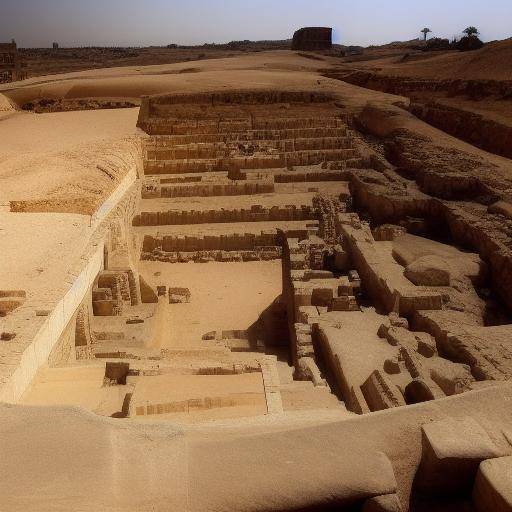
The archaeological site of Olduvai has witnessed some of the most significant discoveries in the field of archaeology. With more than two million years of history, this place offers a unique window to the past of humanity. In this article, we will explore the historical importance and the latest findings in Olduvai, as well as their relationship with archaeology in general.
Introduction
The Olduvai region, located in Tanzania, has been a focus of fascination for archaeologists and paleontologists because of the exceptional discoveries that have been made there. Through meticulous excavations, an important part of the history of human evolution has been rebuilt. In this article, we will take a look at the latest discoveries in Olduvai and examine their relevance in the archaeological context.
History and Background
The history of Olduvai dates back millions of years, when the ancestors of the modern human being inhabited this region. The discovery of fossil remains and stone tools has provided valuable information on the evolution of the first hominids. The findings in Olduvai have been fundamental to understanding the transition from primitive societies to modern civilizations.
Significant discoveries
Among the most significant discoveries in Olduvai are the remains of the Homo habilis, considered as one of the first hominids to manufacture stone tools. Likewise, evidence has been found of the presence of the Homo erectus, broadening knowledge of the spread of the human species by the African continent. These discoveries have redefined our understanding of human evolution and contributed to the reconstruction of the timeline of mankind.
Archaeology in Olduvai
Archaeology in Olduvai plays a fundamental role in the preservation and study of the vestiges of the human past. The methods of excavation, analysis and dating used on this site have laid the basis for modern archaeological practices. Technological advances have allowed greater accuracy in the dating of findings, which has provided key information on the different stages of human evolution in Olduvai.
Analysis in Deep
Analyzing the most recent discoveries in Olduvai, there is evidence of an interdisciplinary approach that has allowed a more complete view of prehistoric life in the region. Collaboration between archaeologists, anthropologists and geologists has enriched the understanding of Olduvai's history and has helped unravel the mysteries of the first human societies.
Challenges and Opportunities
As archaeology progresses, it faces challenges in the preservation of archaeological sites, as well as in the precise interpretation of the vestiges found. Advances in dating and analysis techniques have provided new opportunities for Olduvai's study, but they also pose challenges in terms of preservation and funding for research.
Futures
The future of archaeology in Olduvai is full of promises in the understanding of our evolutionary history. The integration of multidisciplinary approaches, the development of innovative technologies and international collaboration are key aspects that will define the course of future research on the site.
Conclusions and FAQs
Conclusions
The most recent discoveries in Olduvai offer a fascinating view of human evolution and provide important foundations for archaeology. The continued exploration and understanding of this emblematic site will continue to play a crucial role in our understanding of the history of humanity.
Frequently asked questions
1. Why is Olduvai so important in the history of human evolution?
Olduvai is crucial in the history of human evolution due to the numerous discoveries of fossil remains, tools and evidences of human activity dating back millions of years. These findings have significantly contributed to our understanding of how the first human beings evolved and have provided fundamental insights about their behavior, tools used and social skills.
2. What are some of the most important discoveries in Olduvai?
Some of the most outstanding discoveries in Olduvai include remains of the Homo habilis, one of the first hominids known for making stone tools, and evidence of the presence of the Homo erectus. These findings have revolutionized our understanding of human evolution and have contributed significantly to archaeological science.
3. How do excavations take place in Olduvai and what techniques are used?
Excavations in Olduvai require meticulousness and precision to preserve fossil remains and archaeological evidence. Careful excavation techniques are used as well as advanced technologies for the analysis and dating of findings, including methods such as radiocarbon dating and digital rebuilding of deposits.
4. What is the importance of archaeology in Olduvai for our current understanding of human history?
Archaeology in Olduvai is essential to our current understanding of human history, as it provides tangible evidence of the early evolution and achievements of mankind. These findings help us to rebuild the ancient environments in which our ancestors lived and to better understand how the first human societies emerged and developed.
5. What are some of the current challenges facing archaeology in Olduvai?
Preservation of archaeological sites, precise interpretation of findings and funding for research are some of the current challenges facing archaeology in Olduvai. In addition, the sustainable management of natural and cultural resources in the region is essential to preserve this invaluable archaeological heritage.
6. What are the future prospects for archaeology in Olduvai?
Future prospects for archaeology in Olduvai include the integration of multidisciplinary approaches, the development of innovative technologies and the promotion of international collaboration. These initiatives will be key to further unravel the mysteries of human evolution and preserve the archaeological legacy of Olduvai for future generations.
In short, the most recent discoveries in Olduvai offer a unique vision of human history and play a fundamental role in contemporary archaeology. Olduvai's legacy continues to inspire interdisciplinary research and progress in understanding our evolution as a species.