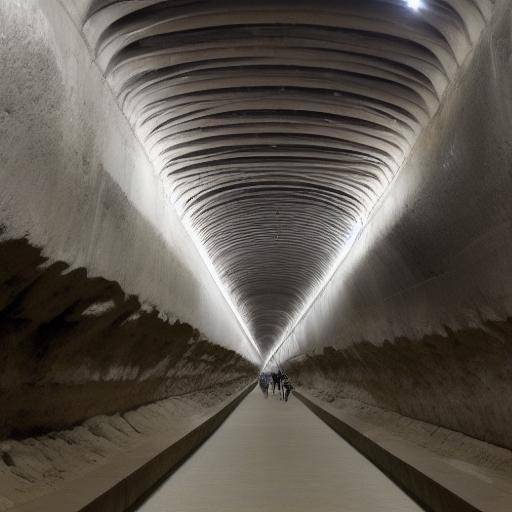
Parisian catacombs are an underground labyrinth that houses countless mysteries, legends and myths that have fascinated generations. This article will take you to a journey through the depths of this vast system of tunnels, presenting legends, myths, culture and history that will make you wonder. Discover the fascinating stories that have endured over the centuries and immerse yourself in the intriguing world of Parisian catacombs.
Introduction
The catacombs in Paris represent one of the most enigmatic and mysterious sites in the French capital. These ancient underground quarries full of human bones have aroused numerous stories, myths and legends over the years. In this article, we will explore the fascinating narratives that have emerged around the catacombs, examining their influence on popular culture and its historical legacy.
History and Background
The catacombs of Paris date back to the times of the Romans, when the limestone was extracted for the construction of the city. Over the centuries, these underground quarries became an overwhelmingly populated space for the remains of past generations. During the 18th century, due to the superpopulation of urban cemeteries, the decision was made to move human bones to the ancient quarries, giving rise to the catacombs as we know them today.
The catacombs, in addition to their impressive history, have been the scene of numerous events over the centuries. From the French Revolution to the Second World War, these depths have kept secrets and fueled the imagination of writers, philosophers and artists.
Legends and myths
The Secret Society of Cataphiles
One of the most persistent myths around catacombs is the existence of a secret society known as the "Cataphiles". These individuals, fascinated by the mystery and history of tunnels, clandestinely explore catacombs, organizing secret meetings and cultural events in the underground depths. Although mostly urban explorers and history enthusiasts, the existence of this community adds an air of mystery and adventure to the legends of the catacombs.
The Lost Ribbon of 1990
One of the most frightening urban legends is the story of a videotape found in the catacombs in the 1990s. According to legend, the tape shows a man lost in the tunnels, filming his desperate attempt to find the way out. The recording ends abruptly, without knowing what happened to the man. This story has fed numerous documentaries and articles, becoming a modern myth associated with catacombs.
The Phantom of Val-de-Grâce Hospital
Another popular legend speaks of a ghost that supposedly inhabits the catacombs near the former Hospital of Val-de-Grâce. According to the myth, the spirit of a hospital physician, who died in mysterious circumstances, wanders through the tunnels, seeking revenge or perhaps peace. Scouts have reported sightings of shadows and heard inexplicable noises, feeding the belief in this ghost.
Culture and Legacy
The cultural impact of the Parisian catacombs extends beyond mere legends and myths. The presence of this vast underground complex has left an indelible mark on the collective imagination, permeating literature, art, music and cinema. Artists and creators from around the world have found in the catacombs an inexhaustible source of inspiration, reflecting in their works the enigmatic and evocative atmosphere emanating from these underground tunnels.
Literature and Cinema
The catacombs have been the scene and source of inspiration for numerous literary and cinematic works. From mystery and horror novels to adventure films, catacombs have captured the imagination of authors and filmmakers, contributing to their mysticism and appeal.
Music and Art
In the field of music and art, catacombs have influenced the creation of works that explore themes of death, mystery and macabre. Gothic rock bands, visual artists and photographers have used catacombs as a backdrop and central theme in their creations.
Analysis in Deep
The legends and myths that have arisen around the Parisian catacombs not only represent an expression of the collective imagination, but also reflect deeper aspects of the human psyche. Fear of the unknown, fascination for death and the transcendence of time are recurring themes in these narratives, revealing the complex interactions between culture and psychology of a constantly evolving society.
Actual and Future Impact
Today, Parisian catacombs remain a popular tourist destination, attracting visitors from all over the world eager to know their intriguing history and immerse themselves in their mysterious aura. In addition, archaeological research and conservation projects continue to be carried out to preserve this unique heritage. The legacy of the Parisian catacombs will last as an infinite source of inspiration and astonishment for future generations.
Conclusion
The catacombs of Paris are much more than just an archaeological site; they are a vast and mysterious labyrinth that has captured the imagination of generations. His legends and myths, fed by centuries of history and exploration, continue to fascinate and frighten equal parts. From secret societies to restless ghosts, the stories that are interwoven in these dark tunnels invite us to reflect on the death, mystery and resistance of the human spirit. In exploring the catacombs, we not only discover a fragment of the past, but also immerse ourselves in a universe of stories and secrets that will continue to resonate in time.
To continue reading about the Parisian catacombs, their impact on popular culture, their influence on art and literature, their historical importance and more, consult the full section of the original article.