Since time immemorial, ancient Egypt has exercised an incomparable fascination in the collective imagination. Their pharaohs, their imposing monuments and their extraordinary artistic achievements have become synonyms of power, legacy and a story that awakens the curiosity and astonishment of entire generations. In this article, we will explore in depth the legacy of the Pharaohs, unraveling their history as we contemplate their indelible footprint in the ancient world and relevance today. Join us on this journey through the time and greatness of an incomparable civilization.
Introduction to the Greatness of Pharaohs
From the majestic temples of Abu Simbel to the enigmatic pyramids of Giza, the greatness of the Pharaohs is a legacy that transcends time. The Pharaohs not only ruled ancient Egypt with a fist of iron, but were also the guardians of a rich cultural tradition, an empire based on divinity and an opulence that defies human logic. Throughout this article, we will explore the highlights of his reign, as well as the lasting influence they have had in art, architecture and history itself.
History and origin of the Pharaohs
The Pharaohs, known as 'sons of Ra', were not only ostentating earthly power, but also seen as semi-divine beings, in charge of maintaining the cosmic order and stability of Egyptian society. His influence transcended the known borders, becoming regarded as the bridge between the gods and the mortals. This divine role gave them absolute power over society, religion and economy.
The first known Pharaoh was Menes, who unified Upper and Lower Egypt around 3100 BC, thus establishing the first dynasty. Since then, a succession of Pharaohs left a legacy of military conquests, architectural splendour and immeasurable riches. The Pharaohs were buried in majestic pyramids that were erected as testimony to their might, reflecting their belief in life beyond death and the importance of preserving their legacy for eternity.
Immortalized legacy in art and architecture
Egyptian art, influenced by belief in life after death, provides a unique testimony to the legacy of the Pharaohs. The colossal statues, the mural paintings and the engravings in the graves transport us to a world where life and death intertwine in an eternal symbiosis. Each work of art served a specific purpose, from honoring the gods to eternalizing the memory of the Pharaohs and their exploits.
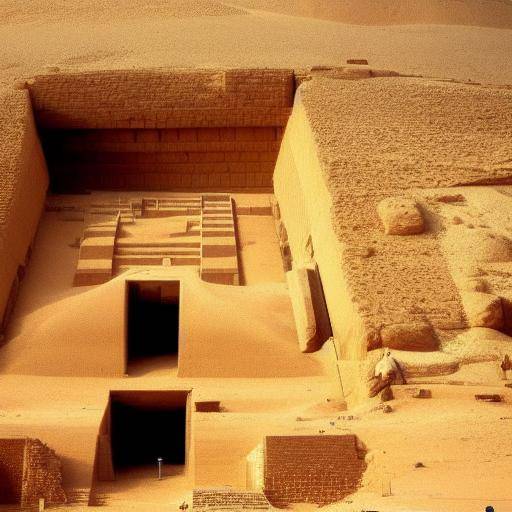
The monumental architecture of the Pharaohs is a tangible testimony of its greatness. The pyramids of Giza, built with mathematical precision that challenges modern understanding, remain an architectural wonder that amazes those who contemplate them. These majestic structures, together with the magnificent temples and royal tombs, testify to the technical and artistic prowess of a civilization ahead of its time.
Detailed exploration of the Pharaonic Legacy
Challenges and achievements throughout history
Despite their amazing legacy, the Pharaohs faced constant challenges, both internal and external. The periods of political instability, foreign invasions and internal conflicts testified to the strength and leadership of the Pharaohs. However, his ability to maintain the balance between internal stability and external threats marked a milestone in the history of ancient Egypt, whoseherence remains the subject of study and admiration today.
The preservation and preservation of the pharaonic monuments is a constant challenge. Erosion, urbanization and mass tourism pose risks to these historic treasures. However, thanks to the joint efforts of archaeologists, conservationists and the Egyptian government, measures have been implemented to protect and safeguard this legacy for future generations.
Current Relevance and Future Projections
The legacy of the Pharaohs remains relevant today, not only from a historical and archaeological point of view, but also in the cultural and artistic sphere. The influence of Egyptian art extends to contemporary disciplines, inspiring artists, architects and designers from around the world. Faraonic iconography has become a symbol of exoticism and elegance, often reinterpreted in fashion, advertising and popular culture.
As for tourism, the Pharaonic monuments continue to attract millions of visitors every year, generating a significant economic impact for Egypt. The promotion and preservation of these historic sites are vital to the tourist industry of the country, in turn contributing to the global recognition of the importance of the faraonic legacy.
Conclusion
The legacy of the Pharaohs is an epic of power, art and vision that continues to amaze and captivate the world. Its lasting influence extends far beyond the sands of the desert, transcending the barriers of time and distance. Today, the Pharaohs continue to dazzle us with their greatness, reminding us that the footprint of a millennial civilization can continue to illuminate the path to the future.
Frequently asked questions
What is the meaning of the word "faraon"?
The word "faraon" comes from the ancient Egyptian "per aA", which means "great house" and originally referred to the royal palace. Over time, the term went on to designate the Egyptian monarch as supreme ruler.
How did religion influence the role and power of the Pharaohs?
Religion had a central role in Egyptian society, and Pharaohs were seen as intermediaries between gods and human beings. His authority was closely linked to his divine condition, which gave them absolute power over the earth and its inhabitants.
Why did they build pyramids and what was their purpose?
The pyramids were built as tombs for the Pharaohs, conceived as monuments to the immortality of the ruler and as places where the Pharaoh would enjoy an eternal life alongside the gods.
What impact did the faraonic legacy have on the history of art and architecture?
Egyptian art and architecture have had a lasting impact on the history of art and architectural theory. The techniques and symbolisms used in building monuments such as pyramids have influenced later generations of artists and architects.
What are the main threats to the preservation of the pharaonic legacy today?
Urbanisation, mass tourism and erosion are some of the main threats to the preservation of the faraonic legacy. The Egyptian government and various organizations work together to mitigate these risks and preserve these treasures for future generations.
How has the study of ancient Egypt and Pharaohs evolved over time?
The study of ancient Egypt has experienced significant progress in the development of new technologies and interdisciplinary research. The understanding of the life and legacy of the Pharaohs continues to be enriched with every new discovery and archaeological find.
With these answers, we hope to have shed light on significantly the relevance and historical, cultural and artistic impact of the Pharaohs and their legacy.
Conclusion
The legacy of the Pharaohs is an incomparable testimony of greatness, power and art that has endured over millennia. Through its imposing monuments, its intricate iconography and its lasting influence in history and art, Pharaohs have left an indelible mark on humanity. His legacy continues to inspire, astonish and challenge the imagination of present and future generations, reminding us that the greatness of an ancient civilization remains an inexhaustible source of teachings, mystery and admiration.
As we contemplate the majestic pyramids of Egypt, the colossal statues and the unearthed treasures of royal tombs, we remember that the greatness of the Pharaohs endures in every stone, in every inscription and in every work of art that has challenged the oblivion of time. His legacy is a treasure of humanity, a window into the past that invites us to reflect on the power, beauty and transcendence of a civilization that has left an indelible mark in the history of humanity.
Throughout this journey, we have explored how the Pharaohs have forged their legacy through a unique amalgam of power, art and vision, and how their footprint endures in the present, inspiring generations to come to contemplate their greatness. From the dazzling horizons of the pyramids to the intricate reliefs of the temples, the greatness of the Pharaohs continues to captivate and illuminate the way to the future, reminding us that the legacy of an ancient civilization remains an inexhaustible source of wonder, wisdom and admiration.
The legacy of the Pharaohs lives, defying oblivion and reminding us that greatness, power and art endure throughout the centuries, ready to reveal their secrets to those who dare to contemplate their greatness!