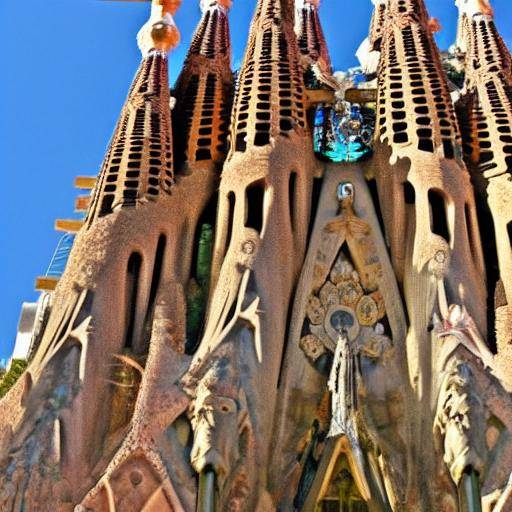
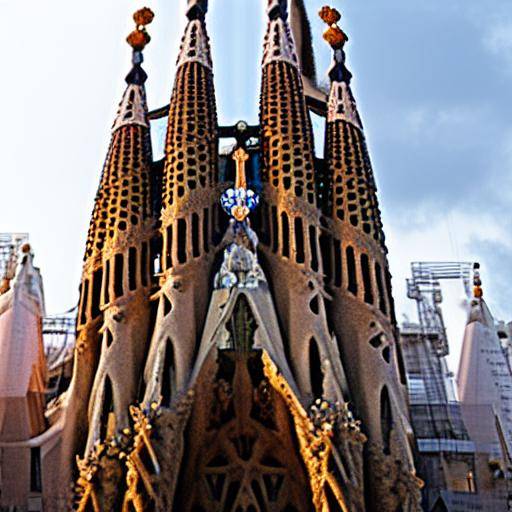
The Sagrada Familia is one of the most iconic monuments in the world and an architectural gem that has captivated millions of people with its magnificence and history. A distinctive element of the city of Barcelona, this temple is a masterpiece that has resisted the passage of time and witnessed the evolution of humanity. In this article, we will explore in depth the fascinating history behind the Sagrada Familia, the innovative vision of its main architect, Antoni Gaudí, and the impact he has had over the years.
Introduction
The Sagrada Familia, one of the most emblematic monuments in Barcelona, attracts millions of visitors every year with its spectacular facade and its intricate architecture. However, beyond its impressive appearance, the history surrounding this temple is equally captivating. From its conception to its present state, the Holy Family has witnessed significant events that have shaped its identity and meaning for the world.
In this article, we will immerse ourselves in the history of the Sagrada Familia, exploring its evolution over the years, the visionary architect behind his design, Antoni Gaudí, and the transcendence of this masterpiece in the historical and cultural context. We will discover how the combination of art, architecture and spirituality has shaped this wonder that continues to amaze and fascinate those who have the privilege to witness it.
History and Background
The history of the Holy Family dates back to 1882, when the first stone of this impressive temple was placed. However, the project was intended to transcend generations, as its construction continues today, fueling the fascination and intrigue around its completion.
The genius behind this masterpiece is Antoni Gaudí, a visionary architect whose revolutionary vision and unshakable dedication have left an indelible mark on the history of architecture. Gaudí not only conceived the Holy Family as a monumental structure, but also endowed it with deep symbolic meanings that intertwine with nature, faith and spirituality.
During his life, Gaudí worked tirelessly on the Sagrada Familia, entering every detail with passion and commitment. Although its work transcended its own existence, the Holy Family still faithfully reflects its original vision, making it a unique expression of its creative genius.
Throughout its history, the Holy Family has witnessed various events and transformations that have shaped its identity. From interruptions in construction to moments of inspiration and architectural discoveries, each stage of its evolution reveals an exciting narrative that allows us to understand its meaning in the historical and cultural context.
Analysis in Deep
The Sagrada Familia is not only an architectural monument, but also an inexhaustible source of beauty, mystery and meaning. Its intricate facade, imposing towers and ornamental details captivate those who contemplate it, inspiring reflections on the connection between the earthly and the divine.
Gaudí's influence on modern architecture is undeniable, and the Sagrada Familia represents the apogee of his creative genius. Its structural innovations, organic approach and intricate symbolism challenge traditional conventions, making it a unique and unique work. The combination of art and architecture in the Sagrada Familia transcends the limits of a conventional construction, offering an experience that stimulates the senses and awakens the imagination.
At the same time, the Sagrada Familia faces constant challenges in its construction process, from technical issues to discussions on its design and completion. However, every obstacle has strengthened the commitment to preserve Gaudí's original vision, keeping alive the flame of his legacy for generations to come.
Comprehensive review
The importance of the Sagrada Familia goes beyond its architectural monument. Its impact on the tourism, culture and identity of Barcelona makes it an emblematic symbol of the city. The interaction between the Sagrada Familia and its surroundings reflects a unique symbiosis that enriches both the city and the monument itself.
Moreover, the historical relevance of the Holy Family lies in its ability to transcend temporary barriers and connect with the sensitivities of different times. Its evolution over the years offers a window to the past, present and future, providing a tangible testimony of human perseverance and unlimited creativity. This ability to resonate with various generations makes it a living monument, whose importance transcends the limitations of time and space.
Comparative analysis
Compare the Sagrada Familia with other architectural and religious monuments is a challenging task, since its singularity is undeniable. However, it is possible to distinguish it by its innovative approach and its ability to evoke deep emotions in those who visit it. The integration of Gothic and Modernist elements in its design is the notable difference of other temples, infusing in it a unique aesthetic that merges the old with the contemporary.
As for the figure of Gaudí, his influence on architecture goes beyond the Sagrada Familia. His contributions to Catalan modernism and his pioneering approach to integrating nature into architectural design distinguish him as an incomparable master whose legacy endures in history.
Future and Scholarship Councils of the Industry
For those who wish to experience the Sagrada Familia in all its magnificence, it is recommended to plan the visit in advance, book tickets with specific time to avoid long rows, and take advantage of the opportunity to learn about its history in guided tours. It is essential to explore every detail with an open mind and a receptive heart, allowing the essence of the Holy Family to inspire a profound and meaningful appreciation.
In addition, understanding the influence of Gaudí in modern architectural design can enrich the understanding of his works and its impact on the world of art and culture. Dipping into your legacy through exhibitions, books and documentaries provides a window to the brilliant mind of this creative genius.
Industry Perspectives and Expert Reviews
Various experts in architecture and art have expressed their admiration for the Sagrada Familia and the legacy of Gaudí, highlighting its unique contribution to the world heritage. Their views underline the importance of preserving this masterpiece for future generations, recognizing its relevance in the architectural and cultural spheres. They have also shared their ideas on the role of the Holy Family in the contemporary context, highlighting their ability to continue to inspire and astonish those who visit it.
Case Studies and Real Life Applications
The influence of the Sagrada Familia and Gaudí extends beyond the artistic and architectural sphere, impacting people from different backgrounds and contexts. Through case studies, it is possible to explore how this masterpiece has influenced the lives of individuals and communities, serving as a source of inspiration and reflection in different fields.
Future Trends and Predictions
The legacy of the Sagrada Familia and Gaudí will continue to resonate in the world of art and architecture, serving as a beacon of creativity and innovation. Future trends suggest greater recognition of the importance of preserving and protecting cultural heritage, which ensures that the Holy Family will remain a benchmark for art, architecture and spirituality in the coming decades.
Conclusions
The history of the Holy Family is a testimony of dedication, creativity and transcendence. Its evolution over the years reflects the transforming power of art and architecture, as well as the ability of a monument to transcend cultural and temporal barriers. Antoni Gaudí left an indelible legacy in the form of the Sagrada Familia, a masterpiece that continues to inspire admiration and astonishment in every glance.
This deep exploration of the sacred Family and the vision of Gaudí offers us a richer and more meaningful understanding of its importance in the historical and cultural context. As the Holy Family continues its path to completion, its legacy will remain an eternal symbol of human creativity and spiritual transcendence.
Frequently asked questions
What is the story behind the Holy Family?
The Sagrada Familia is a Catholic temple in Barcelona, Spain, designed by the architect Antoni Gaudí. Its construction began in 1882 and still continues today, making it one of the most iconic and lasting structures in the world.
Who was Antoni Gaudí and what was his vision for the Holy Family?
Antoni Gaudí was a renowned Catalan architect known for his modernist style and innovative approach to architectural design. His vision for the Holy Family included symbolic, organic and spiritual elements that were integrated into each aspect of the structure.
Why is the Holy Family so important from the historical and cultural point of view?
The Holy Family represents not only an architectural landmark, but also a symbol of human creativity, perseverance and the connection between the earthly and the divine. Its impact on the history and culture of Barcelona and the world makes it a monument of lasting relevance.
How long will it take to complete the Holy Family?
Although a final deadline cannot be set, it is estimated that the construction of the Sagrada Familia will be completed in the coming decades, which will mark the end of one of the most significant architectural works in history.
What is the impact of the Sagrada Familia on the tourism and economy of Barcelona?
The Sagrada Familia is one of the main tourist attractions in Barcelona, attracting millions of visitors every year and contributing significantly to the local economy through tourism, hospitality and trade.
What lessons can we learn from the history of the Sagrada Familia and its architect, Antoni Gaudí?
The history of the Sagrada Familia and Gaudí's vision teach us the importance of dedication, creativity and innovation in the creation of lasting monuments that transcend the limitations of time and space.
Concluding, the story behind the Sagrada Familia and Gaudí’s vision reveals an extraordinary legacy that continues to marvel at generations. From its historical roots to its contemporary implications, this emblematic monument remains an eternal testimony of human creativity and the search for spiritual transcendence.