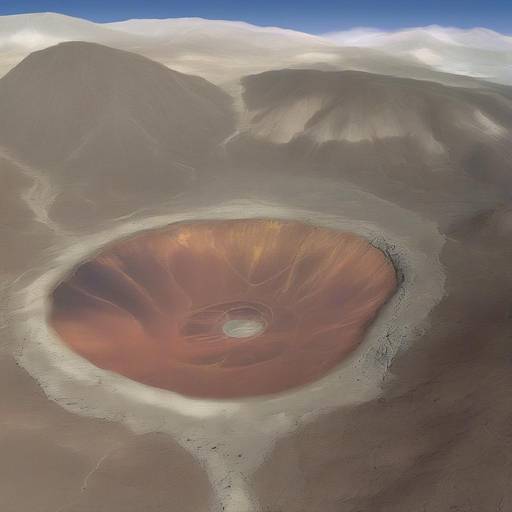
The Salar de Atacama is one of the most impressive and unique landscapes in Chile. Known for its vast expanse of living rooms that contrast with the intense blue of the sky and the desert landscape that surrounds it, this place is much more than a simple tourist attraction. The geology and history behind this hall reveals a fascinating natural phenomenon that has evolved over millions of years, giving rise to a unique ecosystem in the world. In this article, we will explore in depth the geological origin of the Salar de Atacama, its history and its relevance today.
Introduction
The Salar de Atacama, located in the Region of Antofagasta in northern Chile, is the largest salt flat in Chile and the third largest in the world. This stunning landscape extends over an area of approximately 3,000 km2 and is at an average altitude of 2,300 meters above sea level. What makes this saltwater even more amazing is that it is in the midst of the world's most arid desert, the Atacama Desert, which makes it a natural oasis in the midst of an extremely inhospitable environment.
History and Background
The Salar de Atacama has a geological history dating back to millions of years. During the Tertiary period, the region experienced a series of geological transformations that led to the formation of this hall. The evaporation of the waters of prehistoric lakes that covered the region left deposits of salt that were exposed by tectonic movements and climatic changes, thus creating the surreal landscape that we see today. The continued geological action of volcanic activity and the shortage of rains have helped to maintain this impressive environment throughout the millennia.
Throughout history, the Salar de Atacama has played a significant role in the lives of indigenous peoples who have inhabited the region. The indigenous peoples who inhabited the area, such as the Atacameños, used the salins for trade and as a source of salt, an invaluable resource in a desert environment. The presence of lagoons in the hall has also been crucial for local flora and fauna, serving as a vital ecosystem in an extremely arid environment.
Analysis in Deep
The importance of the Salar de Atacama is not limited to its fascinating geological origin. Its contemporary relevance lies in its vast natural resources, which include minerals such as lithium, potassium and boron, among others. These mineral resources have made the salt flat a key point in the mining industry, with significant impacts both nationally and globally. The extraction of lithium, in particular, has gained prominence due to its use in the manufacture of batteries for electric vehicles, generating an economic and strategic interest in the living room. This situation has led to discussions about environmental sustainability and the impact on local communities, leading to the need to strike a balance between the exploitation of natural resources and the conservation of the environment.
Comprehensive review
Compared to other salt rooms in the world, the Salar de Atacama stands out for its ecological complexity and for being a fragile ecosystem that requires careful protection and management. Current challenges include the conservation of lagoons and local biodiversity, as well as the sustainable management of mineral resources. These issues raise fundamental questions on how to ensure a sound exploitation of natural resources without compromising long-term ecological balance.
Initiatives have been proposed to balance the economic exploitation of the salt room with environmental protection, such as innovative technologies for the sustainable extraction of lithium and environmental education programmes to sensitize local communities and visitors to the importance of preserving this unique ecosystem.
Comparative analysis
Compared to other geological and salt sites in the world, the Salar de Atacama stands out for its unique combination of geological characteristics, historical value and economic value. While other salt rooms, such as the Salar de Uyuni in Bolivia, also have a similar geological appeal, the Salar de Atacama stands out for its importance in the mining industry and its role in the transition to a more sustainable economy based on renewable energy.
Practical Tips and Accessible Recommendations
For those who wish to visit the Salar de Atacama, it is essential to follow responsible tourism guidelines that minimize the impact on the environment. Respecting local restrictions and regulations, as well as opting for tourism services that promote environmental conservation and protection, are important steps to preserve the natural beauty of the salt flat.
Industry Perspectives and Expert Reviews
Experts on geology and environmental conservation have expressed the need to conduct continuous scientific research in the Salar de Atacama to better understand its unique geological dynamics and ecology. Views vary on how to balance the exploitation of mineral resources with the conservation of the environment, underlining the importance of a multidisciplinary approach and cooperation between the public and private sectors.
Case Studies and Applications in Real Life
The Salar de Atacama is not only a focus for scientific research, but also a field of testing for more sustainable extraction technologies and environmental management processes. Cases of study that highlight good practices in mining and environment conservation can provide valuable lessons applicable to other geographic and economic contexts.
Future Trends and Predictions
As the demand for lithium and other minerals present in the Salar de Atacama continues to increase, pressures on the ecosystem are expected to also grow. Future trends aim at greater environmental regulation and monitoring, as well as greater integration of sustainable practices in the mining industry. In addition, more attention is being paid to the conservation of water resources and biodiversity in the salt room.
Conclusions and FAQs
In short, the Salar de Atacama is much more than an impressive landscape: it is a living testimony of geological evolution and a crossroads where historical, economic and ecological aspects converge. Its current relevance as a source of key mineral resources places it at the centre of discussions on the sustainability and balance between economic development and environmental protection.
Frequently asked questions
- What is the geological importance of the Salar de Atacama?
The Salar de Atacama has significant geological importance due to its formation over millions of years, its role in mineral storage and its function as a unique ecosystem in the middle of the Atacama Desert.
- What challenges does the Atacama Salar face today?
Current challenges include the sustainable extraction of mineral resources, biodiversity conservation and management of environmental impacts derived from human activity.
- How can I visit the Atacama Salar responsibly?
It is recommended to choose tourist operators that promote sustainable practices, be informed about local regulations and respect the natural environment during the visit.
- What benefits and challenges does lithium extraction present in the Atacama Salar?
Lithium extraction provides economic benefits, but poses challenges in terms of waste management, water conservation and impact in local communities and the surrounding ecosystem.
- How can mineral exploitation be balanced with the conservation of the environment in the Salar de Atacama?
The balance between mineral exploitation and environmental conservation will require strong regulatory measures, more sustainable technologies and the active participation of local communities in decision-making.
- What are the future prospects for the Atacama Salar?
Salar is expected to remain a focus of interest among experts in geology, environmental conservation and the mining industry, with a growing focus on sustainability and ecosystem protection.
In conclusion, the Salar de Atacama is a unique geological testimony that has played an essential role in the history, economy and preservation of the environment. Its complex interaction between contemporary geology, history and practices makes it a site of global importance. As we move forward, it is crucial to address present and future challenges with a balanced approach that will benefit from their natural resources without compromising their valuable biodiversity and geological uniqueness.
This article provides an integral view of the Salar de Atacama, covering its geological origin, history and relevance today. From its geological formation to its economic and ecological implications, the Salar continues to play a leading role in the global scenario.