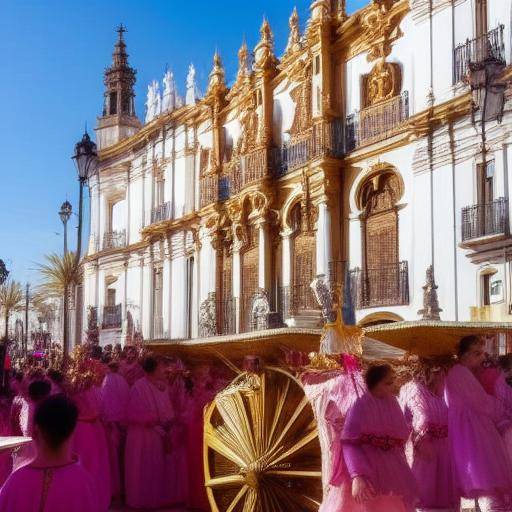
Holy Week in Seville is a religious and cultural festival of great relevance. Over the centuries, it has acquired a unique cultural wealth that attracts thousands of visitors every year. This article offers a detailed view of the events and processions that take place during this celebration, as well as its importance in the Sevillian culture.
Introduction
Easter in Seville is one of the most emblematic traditions of the city. During this week, there are numerous religious events and processions that attract both locals and tourists. In this article, we will explore in depth the history, the current events, the culture that surrounds this festival and the relevance it has for the city of Seville. In addition, we will provide practical advice, relevant information and comprehensive analysis on this very significant issue.
History and Background
The history of Holy Week in Seville dates back several centuries, with its roots in the religious and cultural traditions of the city. This celebration is one of the oldest in Spain and has evolved over time, integrating unique elements that distinguish it from other similar festivities. From its origins to the current celebrations, the Holy Week in Seville has experienced significant development, influencing different aspects of Sevillian life.
Origins and Meaning
The origins of Holy Week in Seville date back to medieval times, when the sisterhoods and religious fellowships began to organize processions in honor of the Passion, Death and Resurrection of Jesus Christ. These events became a public manifestation of faith and devotion, marking the beginning of a tradition that lasts until today. The religious importance of Holy Week in Seville is undeniable, but it is also essential to understand its cultural significance and its impact on the community.
Evolution and Development
Over the centuries, the Holy Week in Seville has experienced significant changes, adapting to historical, social and artistic contexts. Processions, steps, religious images, music, clothing and other elements associated with this festival have evolved, reflecting the diversity and creativity of the Sevillian culture. In addition, the Holy Week in Seville has transcended the limits of the religious to become a social and tourist phenomenon of great relevance.
Carnage and Key Moments
Throughout its history, the Holy Week in Seville has experienced significant milestones that have marked its evolution. From the foundation of the first sisterhoods to the celebration of special events, each key moment has helped to enrich and consolidate this festivities in the identity of Seville. The confluence of tradition, innovation and devotion has defined the history of Holy Week in Seville, establishing a cultural legacy of great value.
Anecdotes and Emblematic Cases
The Holy Week in Seville is full of anecdotes, legends and emblematic cases that illustrate the richness and complexity of this celebration. From historical accounts to contemporary events, these stories offer a unique vision of Holy Week in Seville, revealing new and revealing aspects.
Deep analysis
The celebration of Holy Week in Seville entails a series of benefits and challenges, as well as current trends that impact on its development. In this section, we will carefully analyze various aspects related to Holy Week, from its social and cultural relevance to contemporary issues that influence its expression.
Benefits and Challenges
The Holy Week in Seville brings many benefits to the city, including economic stimulus, the strengthening of cultural identity, the promotion of tourism and the promotion of the sense of community. However, it also faces challenges such as crowd management, preservation of traditions and adaptation to contemporary expectations. Balancing these aspects is essential to understanding the complexity and importance of this celebration.
Current trends
The Holy Week in Seville remains a dynamic cultural phenomenon that adapts to the changes and trends of modern society. The incorporation of new technologies, the greatest diversity of participants and the internationalization of the festival are some of the notable trends that are shaping Holy Week today. In addition, the evolution of artistic expression and the incorporation of innovative approaches contribute to keeping alive the relevance of this event.
Comprehensive review
Easter in Seville has a wide range of applications and best practices that reflect their impact on the community. In this section, we will explore the many facets of this celebration, from the artistic approach to its influence in the daily life of the Sevillians, highlighting its diversity and complexity.
Applications and Best Practices
The Holy Week in Seville is not limited to its religious manifestations, but extends to many activities and practices that enrich the cultural life of the city. From the development of steps and teachings to the logistics organization of the processions, each aspect of the celebration requires a meticulous commitment and passionate dedication. In addition, the cooperation between the sisterhoods, the participation of the musicians and the coasters, as well as the involvement of the community, are outstanding examples of best practices that support this holiday.
Opinions of Experts and Future Perspectives
In order to gain a more complete understanding of Holy Week in Seville, it is crucial to consider the opinion of experts and to analyze the prospects for the future. The comments of historians, anthropologists, artists, religious and other experts provide an enriching view of the importance and impact of this celebration on the Sevillian culture. In addition, exploring future trends and possible directions that the Holy Week might take in Seville offers a clear picture of its continuing evolution.
Comparative analysis
The interrelationship between Holy Week, the events that encompasses and the Sevillian culture allows us to identify similarities, differences and synergies that enrich the understanding of this topic. In this section, we will examine these aspects in detail, presenting concrete examples and relevant scenarios.
Holy Week, Events and Culture: Connections
The Holy Week in Seville is not limited to an isolated set of religious events, but permeates the Sevillian culture at multiple levels. Through its artistic, musical, culinary and social manifestations, Easter influences the identity and traditions of Seville, generating significant connections to other aspects of local culture. In understanding these interrelations, you get a holistic and enriching view of the influence of Holy Week in the daily life of Seville.
Differences and Singularities
Although Holy Week in Seville shares common elements with other religious celebrations, its uniqueness lies in its historical roots, the diversity of its artistic expressions and its social impact. These differences enrich the Holy Week, providing distinctive nuances that highlight it as a unique and transcendent festival in the Spanish cultural context.
Powerful Synergies
Holy Week, the events that make up it and the Sevillian culture are interconnected in ways that favor potential synergies. The integration of music, gastronomy, plastic arts and other cultural expressions during Holy Week enriches events and deepens their impact on the community. Identifying these synergies offers opportunities to broaden the meaning and impact of Holy Week on society.
Practical Tips and Recommendations
For those who wish to participate or witness the Holy Week in Seville, it is important to have practical advice and recommendations that facilitate the understanding and experience of this holiday. Here are a number of useful suggestions that will contribute to the full enjoyment of Holy Week in Seville:
- Plan ahead: Due to the high influx of visitors, it is advisable to plan the activities and processions that you want to attend with enough time.
- Respect and consideration: During processions and events, it is essential to show respect for religious traditions and cultural manifestations.
- Explore local gastronomy: Santa Week in Seville is also an opportunity to taste the rich cuisine typical of the region, such as torrijas and pestiños.
- Take advantage of the guided tours: To understand in detail the history and meaning of the processions, it is advisable to participate in specialized guided tours.
- Keep flexibility: Easter in Seville is a dynamic event, so it is important to be prepared for adjustments in schedules and activities due to unforeseen.
Industry ideas and perspectives
Holy Week in Seville not only represents a tradition rooted in local culture, but also influences many sectors of the industry, including tourism, gastronomy, arts and trade. In this section, we will explore the ideas and perspectives that emerge from the intersection between Holy Week and industry, as well as the views of experts and professionals.
Reflections and Views of Experts
By consulting experts in tourism, culture, history and other related fields, valuable insights are revealed on the impact of Holy Week in Seville on the tourist industry, the preservation of cultural heritage and the promotion of local traditions. The words of these experts offer a deep and reflective analysis of the influence of Holy Week in the industry and economic development of Seville.
Implications and Projections
The implications of Holy Week in Seville in the industry are multiple and cover aspects such as employment generation, the promotion of Sevillian culture at national and international levels, as well as the influence on commercial activity during the holidays. In addition, future projections regarding the economic and cultural impact of Holy Week allow us to see opportunities for growth and sustainable development.
Case Studies and Practical Applications
The Holy Week in Seville has numerous practical applications both in the cultural and tourist spheres, which is reflected in various case studies and practical experiences. Through these real stories, it is possible to understand in more detail the influence of Holy Week in the life of the city and those who experience it.
Cultural and Artistic Impact
The impact of the Holy Week in Seville in the cultural and artistic sphere is manifested through unique experiences, such as participation in the elaboration of the procedural steps, the organization of concerts or thematic exhibitions, and the dissemination of cultural manifestations associated with the festival. These case studies reveal the wealth and diversity of the cultural influence that emanates from Holy Week.
Influence in Tourism and Hospitality
The Holy Week in Seville not only attracts visitors from all over the world, but also generates development opportunities for the tourist and hospitality sector. Through practical cases related to the management of accommodation, the gastronomic offer and the organization of tourist experiences, it is possible to understand how Holy Week influences the economic and social dynamics of the city.
Future Trends and Predictions
In analyzing current trends and projecting future scenarios, it is possible to get an informed view of the direction that Easter could take in Seville and its relevance in the future. Through this prospective analysis, it is possible to identify challenges and opportunities that will shape the development of this holiday in the coming years.
Emerging trends
The emerging trends associated with Holy Week in Seville include the integration of new technologies for the dissemination and experience of processions, the diversification of cultural and artistic proposals, and the promotion of intergenerational participation in the organization and celebration of the festival. These elements offer a vision of the evolution and adaptation of Holy Week to contemporary demands.
Future Predictions and Scenarios
The predictions about the future of Holy Week in Seville point to greater internationalization, a renewal of artistic expressions associated with the festivities and a greater integration of sustainable practices in their organization. In addition, it is projected that Holy Week will remain a distinctive element of the Sevillian identity, adapting to changes without losing its traditional roots.
Conclusion
The Holy Week in Seville occupies a prominent place in the culture and tradition of the city, representing a multifaceted phenomenon that merges religious, cultural, artistic and social. Throughout this article, we have explored in detail the history, events, culture and influence of Holy Week in Seville, offering a comprehensive analysis that spans from its origins to future trends. In understanding the richness and complexity of this festival, it is appreciated its unique meaning in the Sevillian context and its transcendence in today's society.
FAQs
What are the main dates of Holy Week in Seville?
The Holy Week in Seville is celebrated during the week preceding the Resurrection Sunday, with events featured between Palm Sunday and Resurrection Sunday.
How are the processions organized during Holy Week in Seville?
The processions are organized through sisterhoods and religious fellowships, which plan and coordinate the journeys, schedules and participation of the various elements that integrate the processions.
What is the role of music in Easter in Seville?
Music plays a crucial role in processions, being played live during the journeys and generating a unique atmosphere. Music bands and arrows are fundamental elements in this artistic expression.
What distinguishes Holy Week in Seville from other similar celebrations in Spain?
The Holy Week in Seville stands out for the magnitude and solemnity of its processions, as well as for the artistic richness of its steps, images and costumes, which distinguish it as one of the most emblematic celebrations in the country.
How can visitors participate actively in Holy Week in Seville?
Visitors can actively participate in the processions, collaborating in the logistics organization or living the experience from a cultural and tourist point of view, visiting the emblematic and gastronomic places associated with Holy Week.
What are the recommendations to witness the processions in a respectful way during Holy Week in Seville?
It is important to show respect for religious manifestations and to maintain an attitude towards the participants and traditions of Holy Week. In addition, addressing security indications and preventing the development of processions are key aspects to taking into account.
With these complete and detailed answers, readers are provided with valuable information and practical guidance on Holy Week in Seville.
In conclusion, the Holy Week in Seville represents a unique celebration that merges tradition, faith and artistic expression, influencing many aspects of Sevillian life and transcending nationally and internationally. This festival, with its events and processions, is a tribute to the cultural wealth and religious devotion that characterize Seville. Understanding its history, its current manifestations, its influence on culture and its future projections is essential to fully appreciate its meaning and impact on society.
With these reflections, we close this exhaustive analysis of Holy Week in Seville, confident that it has provided an enriching and enlightening vision of this special holiday.