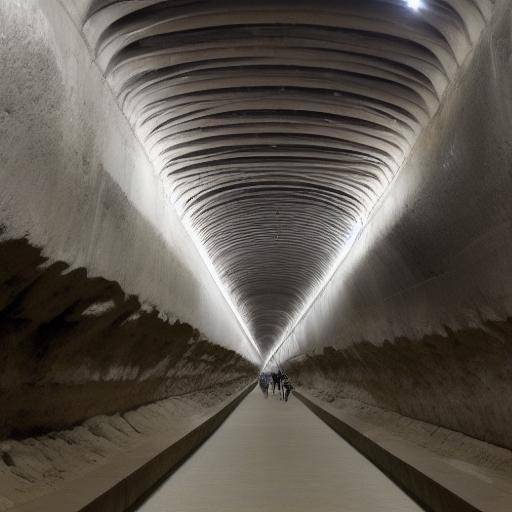
The catacombs in Paris, an underground labyrinth that houses the remains of millions of people, are an intriguing and mysterious scenario. Exploring this unique environment through the lens of photography not only offers the opportunity to capture architectural mastery and historical wealth, but also to translate beauty into darkness. This article explores the fascinating convergence between catacombs, photography and the city of Paris, offering a thorough analysis, practical advice and a vision for the future in this exciting field of underground photography.
Introduction
Lifting photography to new heights, the catacombs of Paris provide a unique backdrop for the lovers of photography who seek to capture the essence and majesty of this ancestral place. This article offers a tour of the history of catacombs, the evolution of photography in this unique environment, its practical application and its impact on the world of contemporary photography. In addition, it provides a detailed overview of the challenges and opportunities faced by photographers in this underground scenario, along with a look at the future of photography in the catacombs of Paris.
History and Background
The catacombs in Paris, known for their intricate tunnels and the artistic disposition of human bones, have a fascinating history dating back to the 18th and 19th centuries. Initially conceived as limestone quarries, its transformation into an underground cemetery emerged as a response to the superpopulation of urban cemeteries. This change was a crucial milestone in the history of the waterfalls and marked the beginning of its fame as a tourist attraction and place of archaeological interest in Paris.
The arrival of photography to catacombs was a significant event that opened new artistic and technical perspectives in the world of photography. Leading photographers such as Felix Nadar and Louis Daguerre were some of the first to venture into this underground scenario, challenging the technical and creative limitations of the time. Their achievements laid the foundation for a long-standing photographic tradition in capturing the unique essence of catacombs, making them a recurring theme in artistic photography and documentary.
Analysis in Deep
Exploring catacombs through photography presents unique challenges, from dealing with difficult lighting conditions to respect the dignity of the place and its final occupants. However, this discipline also offers unmatched rewards in terms of originality and aesthetic beauty. Photographing the catacombs is an exercise in which the artist must be able to capture the darkness, the texture of the bones, the geometric patterns of the walls and the interaction between artificial light and the underground recesses.
The emergence of advanced technologies, such as high-sensitivity sensor cameras and low-light lenses, has allowed photographers to expand their creative possibilities in catacombs. Long-exposure photography, creative use of artificial lighting and experimentation with unusual angles have led to masterpieces that capture the unique essence of this underground environment. In addition, the evolution of image editing software has played a crucial role in providing tools to highlight intricate details and create shocking compositions.
Conclusion
Capturing the essence of Paris' catacombs through photography is an exciting journey that combines history, technique and creativity. With a deep understanding of historical backgrounds, current challenges and opportunities, as well as a futuristic vision, photographers can trace their art and offer the world a unique window to this underground world. From classic black and white images to contemporary compositions of high contrast, photography in the catacombs of Paris continues to attract fans and professionals alike. This article has provided a thorough analysis of this exciting field, offering a unique look at the convergence between the catacombs, photography and the city of Paris.