Introduction
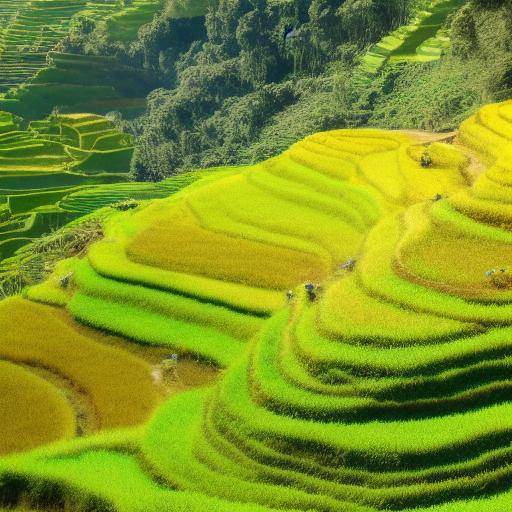
In the heart of the Philippines, there are some of the most impressive natural wonders in the world: the rice terraces. These impressive structures, sculpted on the slopes of the mountains over centuries of laborious work, are silent witnesses of human ingenuity and the beauty of nature. In this photo guide, we will explore the fascinating history and amazing beauty of rice terraces, as well as the tips and techniques to capture their splendor through photography. Join us on a visual and educational journey through the rice terraces of the Philippines.
History and Background
The rice terraces, known as "huafan" in the Philippines, have a rich and fascinating history dating back over 2000 years. These ingenious structures were created by ancient Filipino civilizations to maximize the cultivable land on the steep slopes of the mountains. Over the centuries, these terraces have been carefully maintained and have become recognized as a World Heritage Site by UNESCO.
The evolution of rice terraces over the centuries has been a testimony to the hard work and determination of local communities. From traditional farming techniques to modern methods, rice terraces continue to play a vital role in food security and landscape conservation in the Philippines.
Analysis in Deep
Rice cultivation on terraces is not only impressive from a historical and cultural point of view, but also offers a number of practical benefits and unique challenges. The implementation of modern sustainable agriculture techniques has proved crucial in preserving the integrity of these millennial structures, while ensuring the economic viability of local communities.
Also, the photograph of rice terraces not only seeks to capture its visual beauty, but also to document the life and culture of the communities that depend on these terraces for their livelihood. Photographing rice terraces with sensitivity and respect can be a powerful way to preserve the memory of these natural wonders for future generations.
Comprehensive review
Exploring practical applications and best approaches to photographing rice terraces is essential to capture their beauty in an authentic and meaningful way. Landscape photography experts offer valuable insights on lighting, composition and visual narrative, which are essential to capture the essence of rice terraces.
Comparative analysis
While rice terraces are a distinctive feature of many Asian countries, such as China, Indonesia and Vietnam, the rice terraces in the Philippines stand out for their uniqueness and intrinsic beauty. Landscape photography in the Philippines offers a rich diversity of scenarios, from idyllic beaches to lush tropical forests, but rice terraces remain an incomparable treasure that deserves to be explored and appreciated.
Practical Tips and Accessible Tips
For photography enthusiasts, capturing the magnificent beauty of rice terraces can be a challenge. From choosing the right team to understanding the composition techniques, this section offers valuable practical advice and specific actions to achieve impactful and meaningful photographs.
Industry Perspectives and Expert Reviews
Expert photographers share their knowledge of best practices for nature photography and landscapes, with a special focus on rice terraces. These valuable perspectives and opinions offer an integral vision of the importance of preserving and documenting these natural wonders through photography.
Case Studies and Real Life Applications
Through detailed case studies, we explore how photography of rice terraces has been used as a powerful tool to raise awareness of the importance of conservation and sustainable development. Practical examples show how impactful images can inspire action and change.
Future Trends and Predictions
As awareness of the importance of conserving rice terraces continues to grow, trends in nature photography and landscapes also evolve. Experts share their perspectives on the future of rice terrace photography and how this form of art can continue to contribute to the preservation and appreciation of these natural wonders.
Conclusions
In short, rice terraces not only represent an impressive achievement of agricultural engineering, but also embody the extraordinary relationship between human beings and nature. Through photography, we can capture and preserve the unique essence of these natural wonders for coming generations. As we explore the rice terraces through the lens of photography, let us always remember the importance of preserving and protecting these treasures of humanity.
Frequently asked questions
1. What is the best time of the year to photograph rice terraces in the Philippines?
The best time to photograph rice terraces in the Philippines is during the sowing and harvest season, which usually coincides with the months of July to September. During this period, the rice terraces are in its maximum expression of greenery, which provides an impressive backdrop for the photographs.
2. What are the main considerations for lighting when photographing rice terraces?
Lighting is fundamental when photographing rice terraces. The light of sunrise or sunset creates a warm and soft atmosphere that enhances the texture and colors of the terraces. Avoid direct midday light, as it can generate hard shadows and burn the details.
3. Is there a special permission to photograph rice terraces in the Philippines?
In general, no special permission is required to photograph rice terraces in the Philippines if it is for personal or non-commercial use. However, if you plan to use photographs for commercial or advertising purposes, it is important to verify specific requirements and obtain the necessary permissions.
4. What photo equipment is recommended to capture the beauty of rice terraces?
To capture the beauty of the rice terraces, a versatile photo equipment is recommended that includes a DSLR or mirrorless camera with wide-angle lenses to capture the breadth of the landscapes. It is also important to carry tripods to stabilize the camera on irregular terrain.
5. What are the precautions to take when photographing in rural and mountainous areas?
When photographing in rural and mountainous areas, it is important to be respectful of the local community and its surroundings. Ask for permission before photographing people and respect their privacy. Also, be aware of the environmental impact of your presence and make sure you don't leave a mark on the environment.
6. What advice can you provide to capture authenticity and everyday life on rice terraces?
Capturing authenticity and everyday life on rice terraces requires sensitivity and respect for local communities. He interacts with the locals in a respectful way, shows interest in his culture and way of life, and seeks to capture significant moments that reflect the beauty and authenticity of his everyday life. Find opportunities to portray traditional activities, such as sowing or harvesting, and focus on transmitting the deep connection between people and rice terraces.
Throughout this guide, we have explored the magnificent history, cultural importance and visual beauty of rice terraces in the Philippines. Through photography, we can preserve the unique essence of these natural wonders and share their greatness with the world. By capturing the beauty of the rice terraces, we also celebrate the laborious work of the local communities and reaffirm the lasting value of this unique form of agriculture on terraces.
With these frequent questions, we hope to have addressed the most common doubts related to the photography of rice terraces in the Philippines, providing a full and practical vision for those who want to embark on this exciting photographic company.
Always remember that photography is not only a way to capture the beauty of the world around us, but also a powerful tool to generate awareness and preserve natural and cultural wonders for future generations. May your photo journey through the rice terraces of the Philippines be filled with unforgettable inspiration and discoveries!
We understand the importance of preserving and capturing the beauty of rice terraces in the Philippines, not only for its visual value, but also for its cultural significance and its sustainable role in the local ecosystem. In the guide, we have carefully explored every aspect of this natural wonder, from its history to practical tips for your photography, in order to provide our readers with a complete understanding and an exciting guide through this photographic journey.
We hope that this photographic guide will be a source of inspiration and a valuable resource for all nature enthusiasts, culture and photography!
External sources:
- UNESCO - Rice terrace system in the Philippine Ranges
- National Geographic - The most amazing rice terraces in the world
- Lonely Planet - Philippines: Batad Rice Terraces
Conclusion
Throughout this guide, we have explored the magnificent history, cultural importance and visual beauty of rice terraces in the Philippines. Through photography, we can preserve the unique essence of these natural wonders and share their greatness with the world. By capturing the beauty of the rice terraces, we also celebrate the laborious work of the local communities and reaffirm the lasting value of this unique form of agriculture on terraces.
Practical Tips and Accessible Tips
- Use natural lighting on your behalf. In the photograph of rice terraces, the soft light of sunrise or sunset can create a magical atmosphere and highlight the contours and textures.
- Find unique views. Explore different angles and perspectives to capture the grandeur of rice terraces.
- It interacts with local communities. Photography is not only about capturing images, but also connecting with people and local culture to convey an authentic narrative.
- Be aware of the environmental impact. When exploring and photographing the rice terraces, respect the flora, fauna and the natural environment.
Future Trends and Predictions
As awareness of the importance of conserving rice terraces continues to grow, trends in nature photography and landscapes also evolve. Experts share their perspectives on the future of rice terrace photography and how this form of art can continue to contribute to the preservation and appreciation of these natural wonders.
Conclusion
In short, rice terraces not only represent an impressive achievement of agricultural engineering, but also embody the extraordinary relationship between human beings and nature. Through photography, we can capture and preserve the unique essence of these natural wonders for coming generations. As we explore the rice terraces through the lens of photography, let us always remember the importance of preserving and protecting these treasures of humanity.
Frequently asked questions
- **What is the best time of the year to photograph rice terraces in the Philippines?**The best time to photograph rice terraces in the Philippines is during the sowing and harvest season, which usually coincides with the months of July to September. During this period, the rice terraces are in its maximum expression of greenery, which provides an impressive backdrop for the photographs.
- **What are the main considerations for lighting when photographing rice terraces?**Lighting is fundamental when photographing rice terraces. The light of sunrise or sunset creates a warm and soft atmosphere that enhances the texture and colors of the terraces. Avoid direct midday light, as it can generate hard shadows and burn the details.
- **Is there a special permission to photograph rice terraces in the Philippines?**In general, no special permission is required to photograph rice terraces in the Philippines if it is for personal or non-commercial use. However, if you plan to use photographs for commercial or advertising purposes, it is important to verify specific requirements and obtain the necessary permissions.
- **What photo equipment is recommended to capture the beauty of rice terraces?**To capture the beauty of the rice terraces, a versatile photo equipment is recommended that includes a DSLR or mirrorless camera with wide-angle lenses to capture the breadth of the landscapes. It is also important to carry tripods to stabilize the camera on irregular terrain.
- **What are the precautions to take when photographing in rural and mountainous areas?**When photographing in rural and mountainous areas, it is important to be respectful of the local community and its surroundings. Ask for permission before photographing people and respect their privacy. Also, be aware of the environmental impact of your presence and make sure you don't leave a mark on the environment.
- **What advice can you provide to capture authenticity and everyday life on rice terraces?**Capturing authenticity and everyday life on rice terraces requires sensitivity and respect for local communities. He interacts with the locals in a respectful way, shows interest in his culture and way of life, and seeks to capture significant moments that reflect the beauty and authenticity of his everyday life.
External sources:
- UNESCO - Rice terrace system in the Philippine Ranges
- National Geographic - The most amazing rice terraces in the world
- Lonely Planet - Philippines: Batad Rice Terraces
Conclusion
Throughout this guide, we have explored the magnificent history, cultural importance and visual beauty of rice terraces in the Philippines. Along with practical advice and expert perspectives, this guide offers an integral vision for all those who wish to explore and capture the unique essence of rice terraces through photography.
We hope that this photographic guide will provide valuable inspiration and knowledge for all enthusiasts of photography, nature and culture.
May this guide encourage you to explore, capture and preserve the beauty of rice terraces in the Philippines through your creative and expressive lens!
With this photographic guide, we have covered the magnificent history, cultural importance and visual beauty of rice terraces in the Philippines. Along with practical advice and expert perspectives, this guide offers an integral vision for all those who wish to explore and capture the unique essence of rice terraces through photography.
We hope that this guide will provide valuable inspiration and knowledge for all enthusiasts of photography, nature and culture.
May this guide encourage you to explore, capture and preserve the beauty of rice terraces in the Philippines through your creative and expressive lens!
In conclusion, the beauty of rice terraces in the Philippines is a testimony of human engineering and harmony with nature. Through photography, we can capture and preserve not only its impressive landscape, but also the rich culture and lifestyle of local communities. This photographic guide has explored various aspects of rice terraces, from its history to practical advice and future trends. We hope that this guide will inspire nature and photography lovers to explore this unique treasure and capture its beauty in a meaningful and respectful way.
May this guide motivate you to embark on an exciting and enriching photo journey through the rice terraces of the Philippines!
We hope that this photographic guide has provided a comprehensive and enriching view on the capture of the beauty of rice terraces in the Philippines. Through the combination of history, practical advice and reflections on the future, this guide seeks to inspire the enthusiasts of photography to explore and preserve this natural and cultural heritage significantly.
May this guide be the beginning of an exciting and enriching photographic journey through the wonderful rice terraces of the Philippines!