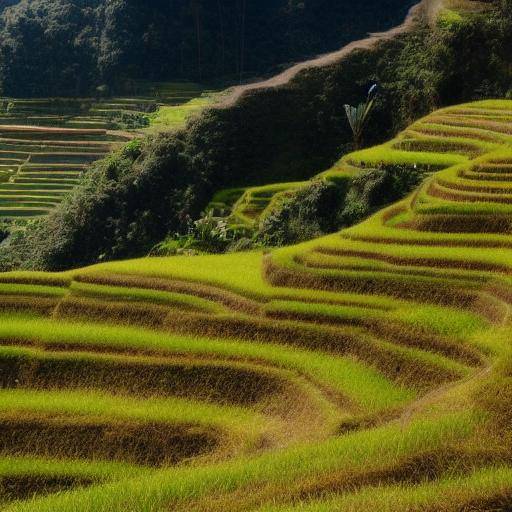
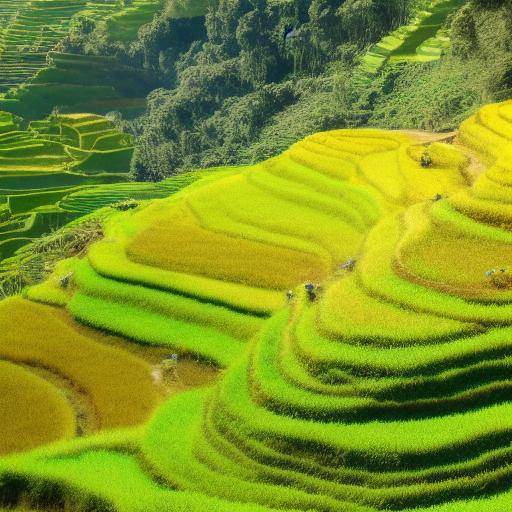
In the vast landscape of China, landscape art flourishes with a rich history, rooted in tradition and cultural aesthetics. From majestic imperial gardens to hand painted mountainous landscapes, Chinese landscapes are a manifestation of harmony between human beings and nature. In this article, we will explore in depth the landscape in China, its evolution over time, its cultural relevance, and its impact on contemporary society.
Introduction
Landscape, known as "Shanshui" in Chinese, is an ancient art that seeks to represent natural beauty through the creation of gardens, paintings and sculptures. In China, this practice has been venerated for centuries and has become an integral part of its cultural identity. From imperial dynasties to modern China, landscaping has been a powerful expression of the intimate connection between human beings and their natural environment.
History and Background
The landscape in China has its roots in the ancient Taoist and Confucian philosophy, which exalts the harmony between man and nature. From the classic gardens of the Song dynasty to the elaborate landscapes of the Ming dynasty, the art of landscape has evolved over time, reflecting the aesthetic and spiritual values of each time. During Qing dynasty, landscaping acquired a more literary dimension, inspired by Chinese poetry and classical literature.
Analysis in Deep
Chinese landscaping is not only an artistic expression, but also a philosophical practice that promotes harmony, serenity and contemplation. Although it has faced challenges in times of revolution and modernization, landscaping has resisted the passage of time, maintaining its relevance as a way of preserving cultural heritage and promoting environmental sustainability.
Exhaustive examination
Chinese landscaping has become a benchmark for sustainable urban design, inspiring contemporary projects that integrate traditional aesthetics with modern demands. The techniques of Chinese landscaping, such as the disposition of rocks and the use of indigenous plants, provide aesthetic and ecological value to urban environments, creating green spaces that foster the connection with nature.
Comparative analysis
Compared to landscapes in other countries, the Chinese approach is distinguished by its emphasis on cultural narrative and its meticulous attention to details. While Japanese landscaping tends to focus on simplicity and serenity, Chinese landscaping embraces complexity and diversity, reflecting the country's cultural and geographical wealth.
Practical Tips and Recommendations
For those interested in incorporating elements of Chinese landscape into their own spaces, it is crucial to understand the symbolism and aesthetic principles that guide this form of art. The choice of elements such as rocks, water and vegetation must take into account its cultural significance and its harmonious integration into the environment.
Industry Perspectives and Expert Reviews
Landscape experts agree that the art of Chinese landscaping has much to contribute to the global practice of landscape design. Their focus on emotional connection with nature and their emphasis on cultural narrative provide valuable insights for professionals of urban design and planning.
Case Studies and Real Life Applications
Several contemporary projects in China have innovatively integrated the principles of traditional landscaping in urban and rural environments, demonstrating their ability to enrich the aesthetic quality of public and private spaces, as well as to promote environmental sustainability, harmony and community well-being.
Future Trends and Predictions
As China moves towards a future marked by urbanization and sustainable development, landscaping will continue to play a crucial role in creating living, aesthetic and culturally significant environments. Chinese landscaping is expected to influence global design practices, inspiring more holistic and contextualized approaches to landscape design.
Conclusions
Landscape in China is more than an artistic expression; it is a living testimony of the profound connection between humanity and nature. With a history rooted in tradition and a contemporary influence on urban design and sustainability, Chinese landscaping remains an inexhaustible source of inspiration, beauty and harmony.
Frequently asked questions
**1. What is the influence of confucianism in Chinese landscaping?**Confucianism has influenced Chinese landscaping by promoting harmony, balance and reverence by nature, values that are reflected in the symbolic disposition of natural elements in Chinese gardens.
**2. How have the principles of Chinese landscaping adapted in contemporary urban environments?**The principles of Chinese landscaping have been adapted in urban environments through the integration of natural elements, such as rocks, water and vegetation, to create green spaces that foster the connection with nature in the midst of densely populated urban environments.
**3. What is the importance of Chinese landscaping in the preservation of cultural heritage?**Chinese landscaping plays a crucial role in the preservation of cultural heritage by transmitting historical and spiritual narratives through the disposition of natural elements and the creation of environments that reflect the rich Chinese aesthetic tradition.
**4. What distinguishing characteristics does Chinese landscaping have compared to other forms of landscape in the world?**Chinese landscaping is distinguished by its emphasis on cultural narrative, symbolic use of natural elements and its integration of philosophical concepts into the creation of landscapes, which differentiates it from other forms of landscapes globally.
**5. How can landscape enthusiasts incorporate elements of Chinese landscaping into their own garden design projects?**Landscape enthusiasts can incorporate elements of Chinese landscaping into their garden design projects by familiarizing themselves with the aesthetic, symbolic and philosophical principles that guide this form of art and apply them harmoniously in their designs.
**6. What are the expectations regarding the future role of Chinese landscape in the field of landscape design at the global level?**Chinese landscaping is expected to continue to influence landscape design at the global level by offering unique perspectives on emotional connection with nature, the preservation of cultural heritage and the promotion of sustainability in urban and rural environments.
With this article, I hope to have provided a profound and enriching view of landscape art in China, highlighting its crucial role in landscape culture and design. I hope that readers have found inspiration in the rich tradition of Chinese landscaping and its contemporary relevance.