Holy Week is a religious celebration of great importance in the Spanish-speaking world, where the passion, death and resurrection of Jesus Christ is commemorated. One of the most outstanding manifestations of this festival is sacred art. The sculptures and processional steps are profound expressions that merge faith, tradition and creativity. In this article, we will explore the art of Holy Week, focusing on sculptures and steps, their meaning, historical evolution, and their relationship with religion.
Introduction
The Holy Week, also known as the Greater Week, is a period of intense reflection and religious fervor. During this week, there are processions, theatrical performances and a wide range of artistic expressions that reminisce the last days of Jesus Christ. In this context, art plays a central role, as through sculptures and procedural steps, the emotions, the fervor and devotion of the faithful are materialized.
History and Background
Holy Week has its origins in traditional Jewish celebrations, such as Easter, which were then incorporated by the Catholic Church to commemorate the passion and resurrection of Jesus Christ. Over the centuries, these celebrations spread across different regions, adopting unique artistic manifestations.
The art of Holy Week, in particular the sculptures of Christ, the Virgin Mary and other saints, as well as the procedural steps that represent different moments of Passion, has evolved through different artistic styles, reflecting not only spirituality, but also sociocultural changes throughout history.
Deep analysis
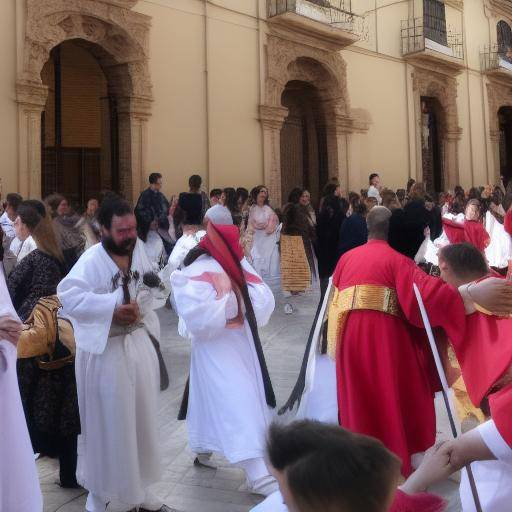
The art of Holy Week not only has a profound religious value, but has also been the object of admiration for its artistic quality and its ability to move the viewers. The sculptures, carved with smear and realism, convey an emotivity that transcends the purely aesthetic. The procedural steps, for their part, constitute a theatrical and ritual manifestation involving a whole community.
Today, the art of Holy Week faces challenges and criticism, but it also experiences a renewed interest in both the artistic and the tourist spheres. While some voices question their relevance today, many defend their importance as a cultural and religious expression rooted in the identity of many communities.
Exhaustive examination
One of the most outstanding features of the art of Holy Week is its roots in society. Processional sculptures and steps are not only displayed in temples or during processions, but are part of the social and cultural fabric of a community. Its influence extends to various artistic disciplines, from painting to music, enriching the cultural heritage of the region in which they unfold.
It is also important to highlight the work of the craftsmen and sculptors who, with mastery, shape these representations. Its techniques, transmitted from generation to generation, constitute an invaluable artistic legacy that requires careful conservation and dissemination.
Comparative analysis
The religious aspect of the art of Holy Week is closely related to its artistic character. Both elements intertwine to convey a spiritual and aesthetic message that has endured over the centuries. Although each region has its own tradition, it is remarkable the presence of similarities in the representation of procedural steps and sculptures, unifying to some extent cultural and artistic diversity.
Practical Tips and Accessible Recommendations
If you want to know more about the art of Holy Week, we offer you some recommendations:
- Visit museums and exhibitions dedicated to sacred art.
- Participate in the processions to live closely the emotivity and the solemnity of these artistic manifestations.
- Investigate the history and symbolism of the sculptures and procedural steps to understand their meaning.
- It supports local craftsmen and sculptors by acquiring sacred art pieces made with dedication and dedication.
Industry Perspectives and Expert Reviews
To understand in greater depth the value and evolution of the art of Holy Week, we have compiled opinions of experts in art history and cultural anthropology, who have provided valuable insights on the importance and impact of these artistic expressions on society.
María Rodríguez, a historian of art, points out: "The sacred art of Holy Week is a living testimony of creativity and popular devotion, which transcends the barriers between religious, artistic and social. Its conservation and diffusion constitute an indispensable commitment to preserve our cultural heritage."
Case Studies and Practical Applications
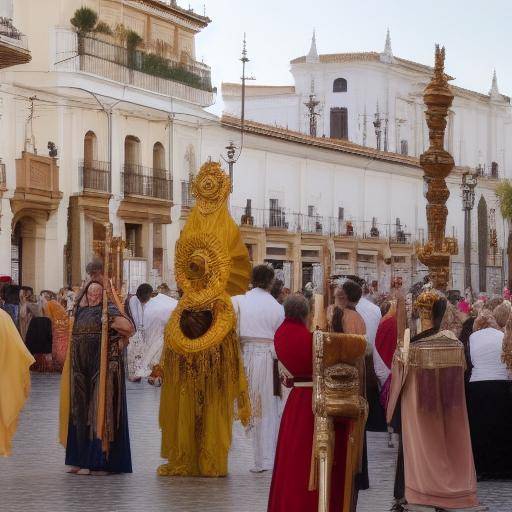
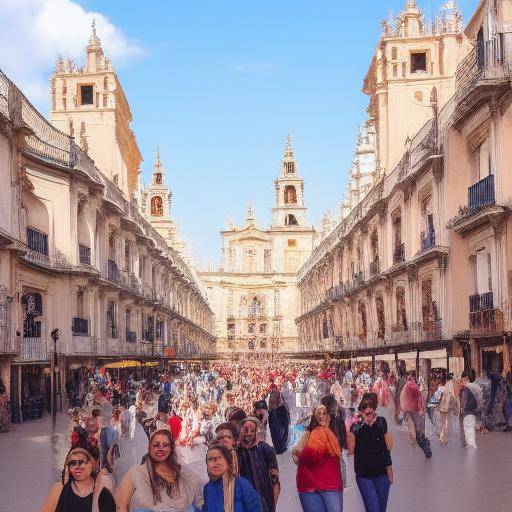
To illustrate the relevance of the art of Holy Week, we present the case of the city of Seville, in Spain, recognized worldwide for its impressive processions and artistic manifestations during Holy Week. This city is a clear example of how sacred art has influenced cultural and tourist identity, attracting visitors from all over the world.
Future and Prognostic Trends
The incorporation of new technologies and artistic approaches, as well as the adaptation of sacred art to contemporary demands, represents a challenge and an opportunity for the art of Holy Week. There is a scene where tradition and innovation merge to continue captivating future generations.
Conclusion
The art of Holy Week, through its sculptures and procedural steps, is a phenomenon that transcends the purely religious, becoming a cultural expression deeply rooted in the identity of the communities. Its evolution over the centuries reflects the capacity of the human being to merge faith, creativity and devotion into artistic manifestations that persist in time.
Frequently asked questions
What is the origin of the sculptures of Holy Week?
The sculptures of the Holy Week have their roots in the religious and artistic tradition of medieval Europe, where the representations of the Passion of Christ were made which later spread throughout the Hispanic world.
What is the importance of sacred art in Holy Week?
Sacred art in Holy Week plays a fundamental role in enriching the spiritual and aesthetic dimension of this festival, allowing the faithful to relive the key moments of the Passion of Christ in an emotional and reflective way.
How is the production of sculptures and processional steps done?
The elaboration of sculptures and processional steps is a thorough work that requires specific craft skills, such as wood carving, plaster sculpture and artistic painting, with techniques transmitted from generation to generation.
Why is the art of Holy Week as relevant in cities like Seville or Granada?
The relevance of the art of Holy Week in cities such as Seville or Granada is due to the entrenched religious, artistic and cultural tradition that has transformed these localities into world references of this festive and artistic manifestation.
How can the art of Holy Week be appreciated by non-religious people?
The art of Holy Week has an aesthetic and sociocultural value that goes beyond the religious dimension, so it can be seen from artistic, historical and anthropological perspectives, regardless of religious beliefs.
What is the future of the art of Holy Week in the current context?
The future of the art of Holy Week is a combination of preserving tradition with artistic and technological innovation, adapting to contemporary demands and exploitatives. It is projected that it will continue to be a cultural and tourist attraction, as well as an area of reflection and artistic inspiration for future generations.
Conclusion
In conclusion, the art of Holy Week, in particular the sculptures and procedural steps, constitutes a cultural, artistic and religious legacy of great relevance in the Spanish-speaking world. Beyond their spiritual dimension, these artistic expressions encapsulate the creativity, devotion and identity of the communities that celebrate them. Its preservation and diffusion allow not only to honor tradition, but also to enrich the cultural heritage of humanity.
In addition to these questions, there are many other concerns that may arise when exploring the art of Holy Week. For this reason, we invite you to deepen this issue, as well as to participate actively in the celebrations and artistic manifestations to experience closely the magnitude and emotiveness of this extraordinary cultural legacy.
With this in mind, we encourage you to continue to explore and value the rich artistic and religious heritage that characterizes Holy Week, keeping alive the admiration for the sculptures and processional steps that, over the centuries, have moved and enriched entire generations.