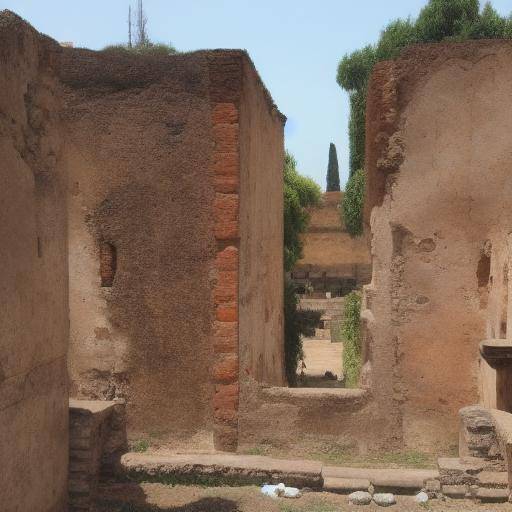
The ancient city of Pompeya has fascinated entire generations with its intriguing history and its impact on culture and history. Discovered after being buried under volcanic ash for centuries, Pompeya offers a unique window to the ancient Roman world. From its thriving daily customs to the tragic eruption of Mount Vesuvius that sealed its destiny, life in Pompeii is a captivating account that deserves to be explored in depth.
Introduction
Pompeii, a prosperous and sophisticated Roman city, was devastated by the eruption of Mount Vesuvius in 79 AD, being frozen in time and preserved under layers of ash and lava. In this article, we will immerse ourselves in the daily life of Pompeya, exploring its customs, traditions and tragedy. We will discover the complexities of his culture, the wealth of his history and the lasting impact of his disappearance.
History and Background
Pompeii was founded in the sixth century BC by the ancient Oscos and later was conquered by the Romans in the 80 BC. The city flourished as an important commercial and residential center before its tragic end. We will explore how Pompeii became a prosperous enclave, highlighting its architectural advances, art, commerce and its unique fusion of Roman and Greek cultures.
In addition, we will address the eruption of Mount Vesuvius that buried the city in ashes, providing details about the exact moment of the catastrophe, its devastating consequences and the rediscovery of Pompeii in the eighteenth century.
Analysis in Deep
In this section, we will enter the customs and daily life of the Pompeyans. From their religious practices to the functioning of their society, we will examine how the inhabitants of Pompeii lived, traded, entertained and honored their gods. We will address key aspects such as social structure, housing, food, leisure and funeral practices.
We will also explore the challenges and dilemmas faced by the citizens of Pompeya in the context of their time, from social tensions to political events and interactions with the Roman Empire. This detailed analysis will give us a clear view of the complexity of the old life in this city on the shore of the Tyrrhenian Sea.
Comprehensive review
In this section, we will deepen the lasting impact of Pompeya on culture and history. We will explore how the unique preservation of Pompeii has allowed archaeologists and academics to thoroughly examine the society, economy and politics of ancient Rome. We will analyze how his rediscovery has influenced the arts, literature and modern perception of history.
In addition, we will compare the similarities and differences between Pompeii and other contemporary Roman cities, highlighting their cultural and historical singularity. This comparative approach will help us to better understand the role of Pompeii in the broader context of the ancient world.
Practical Tips and Accessible Tips
For history enthusiasts who want to visit Pompeya, we will provide practical advice to maximize the experience, including recommendations on the areas to visit, information about the main attractions, as well as the best moments to explore the archaeological site.
We will also offer advice on how to immerse yourself in Pompeya's knowledge and culture through literature, audiovisual media and exhibitions.
Industry Perspectives and Expert Reviews
From the academic point of view, we will consult experts in archaeology, ancient history and classic studies to obtain their valuable insights on the impact of Pompeya on discipline and its continuing relevance in academic research.
We will explore current trends in archaeological research and the discovery of new findings that are shedding light on life in Pompeya. We will immerse ourselves in the academic discussions and debates surrounding Pompeya, which will provide a deep understanding of how scholars interpret and contextualize the history of the city.
Case Studies and Real Life Applications
Through detailed case studies, we will examine how Pompeya's history and customs continue to be relevant in the modern world. We will explore concrete examples of how discoveries in Pompeii have contributed to the understanding of daily life in ancient times, as well as its impact on disciplines such as architecture, anthropology and sociology.
Future Trends and Predictions
Finally, we will explore emerging trends related to Pompeya, culture and history. Based on the opinions of experts and current research, we will offer predictions about the future direction of Pompeya exploration and study, as well as its impact on the understanding of antiquity.
Conclusions
In short, life in ancient Pompeii is a fascinating account of prosperity and tragedy that has left an indelible mark on history and culture. The ancient city and its legacy continue to arouse great interest and admiration throughout the world, serving as a timeless reminder of the ephemeral nature of human life and the importance of preserving and understanding our past.
Frequently asked questions
1. What was the cause of the eruption of Mount Vesuvius that destroyed Pompeii?
The eruption of Mount Vesuvius was caused by the sudden release of volcanic gases and ashes, followed by pyroclastic flows that buried the city.
2. What does Pompeii reveal about daily life in ancient Rome?
Pompeii provides a detailed view of everyday life in ancient Rome, including aspects such as architecture, trade, religion and social customs.
3. What is the importance of Pompeii in the history of archaeology?
Pompeii has been fundamental in the development of archaeological techniques and in the understanding of ancient societies, offering an exceptionally detailed record of life in that period.
4. How has Pompeya influenced contemporary culture?
Pompeii's rediscovery has inspired works of art, literature, cinema and theatre, contributing significantly to popular culture and modern understanding of ancient history.
5. What are the main challenges in the preservation of Pompeya?
The main challenges include the conservation of archaeological remains, the management of tourism and the protection against natural phenomena, such as earthquakes and floods.
6. Where can you find the best exhibitions about Pompeya?
The exhibitions about Pompeii are usually presented in renowned museums, such as the National Archaeological Museum of Naples, the British Museum in London and the Acropolis Museum in Athens.
Concluding, Pompeii, with its vibrant history and tragic destiny, continues to captivate current generations. The preservation of its ruins and its influence on culture and history continue to be themes of great interest and study in the contemporary world.